

Every e-commerce business is sitting on a mountain of missed revenue, and most of them know it. The average cart abandonment rate across online retail is approximately 70% meaning that for every ten shoppers who add something to their cart, seven leave without buying. Multiply that by your average order value, and you’re looking at potentially hundreds of thousands of dollars in lost sales every year from people who were already interested enough to start checking out.
Email re-engagement campaigns have been the traditional recovery tool, but their effectiveness has eroded sharply as inboxes become more crowded and spam filters more aggressive. Push notifications work for the small percentage of customers who’ve opted in. SMS is powerful but often treated as intrusive when used for cold-list recovery.
Ringless voicemail is emerging as the high-conversion channel for e-commerce cart recovery and win-back campaigns that most brands haven’t discovered yet. This guide explains why it works and exactly how to deploy it for your online store.
Why Cart Abandonment Is an Opportunity, Not Just a Problem
Before diving into recovery tactics, it helps to reframe how you think about cart abandonment. Most shoppers who abandon a cart aren’t gone forever, they’re hesitating. Research on shopping behavior shows that the most common reasons for abandonment are: unexpected shipping costs revealed at checkout, a need to comparison shop, timing (not ready to buy right now), or a simple distraction that pulled them away mid-session.
None of these reasons represent a disqualified customer. They represent a prospect who needs a nudge, a reassurance, or simply a reminder that they were in the middle of something. The window for recovery is short, the vast majority of customers who can be recovered will respond within the first 24 to 48 hours after abandonment, but within that window, the conversion rates on a well-executed recovery campaign can be extraordinary.
The challenge with email recovery in that window is attention. Emails sit in inboxes, compete with dozens of others, and are frequently not opened until hours after delivery. A ringless voicemail, by contrast, triggers a notification on the recipient’s phone immediately and feels inherently more personal. It’s not a transactional reminder, it feels like a human reaching out.
How E-Commerce Brands Are Using Ringless Voicemail
Cart Abandonment Recovery
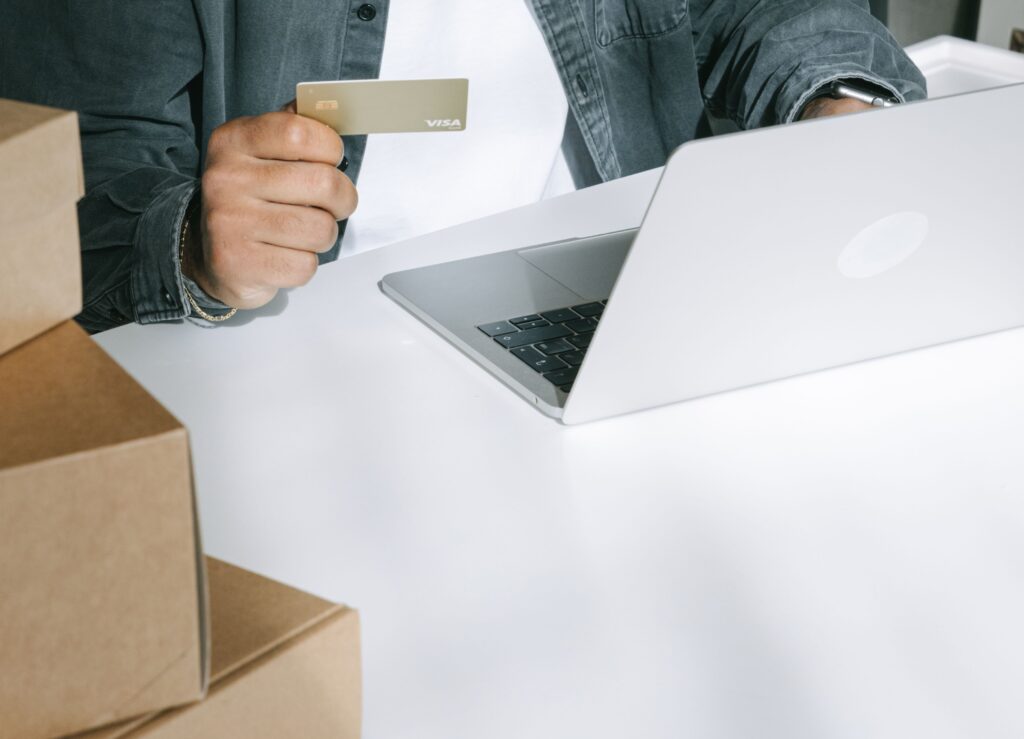
The core use case is simple: a shopper adds items to their cart, begins checkout, provides their phone number (at a minimum), and then abandons. Thirty to sixty minutes later, they receive a friendly ringless voicemail acknowledging that they left something behind and offering a clear path back to complete their purchase.
What makes this work is the voice element. An email reminder is passive. A voicemail from a real human voice feels like a brand that genuinely noticed and cared enough to reach out. Combine that with a personalized SMS sent shortly after, with a direct link back to the cart, possibly with a discount code and you’ve created a recovery sequence that performs far better than email alone.
A sample cart abandonment script might sound like:
“Hi [Name], this is Sarah from [Brand]. I noticed you left some items in your cart I just wanted to make sure everything was okay and that you had a chance to grab them before they sell out. I’m sending you a text with a link straight back to your cart, along with a little thank-you from us. Let me know if there’s anything I can help with.”
Short, warm, human-feeling, and action-oriented. The SMS that follows immediately turns the voicemail into a two-touch sequence that’s difficult to ignore.
Win-Back Campaigns for Lapsed Customers
Every e-commerce store has a segment of customers who purchased once or twice and then went quiet. These customers are far more valuable than cold prospects they already know your brand, they’ve trusted you with their payment information, and they had a good enough experience to buy at least once. The cost of re-activating a lapsed customer is dramatically lower than acquiring a new one.
A well-executed win-back ringless voicemail campaign can reactivate a meaningful percentage of your lapsed customer list. The key is relevance and personalization. Generic “we miss you” messages perform poorly. Messages that reference what the customer actually bought, acknowledge how much time has passed, and offer something specific and genuinely valuable perform far better.
This kind of personalized outreach is more achievable than most e-commerce brands realize. With a platform like Drop, you can segment your lapsed customer list by purchase category, last order date, and average order value and tailor your voicemail scripts to each segment accordingly.
Post-Purchase Upsell and Cross-Sell
The moment after a customer completes a purchase is one of the highest-trust moments in your relationship with them. They’ve just given you money, they’re anticipating their order with excitement, and they’re highly receptive to relevant suggestions.
A ringless voicemail sent 24–48 hours after purchase thanking the customer, confirming their order is on its way, and briefly mentioning a complementary product converts at rates that surprise most e-commerce marketers. Unlike a retargeting ad that feels like surveillance, a voicemail feels like a natural follow-up from a brand that cares.
Boosting customer retention with personalized texts alongside post-purchase voicemails creates a multi-channel experience that dramatically increases the likelihood of a second purchase, the critical threshold where one-time buyers become loyal customers.
Flash Sale and Exclusive Offer Announcements
Your most engaged customers, frequent buyers, high-spenders, loyalty program members respond exceptionally well to feeling like insiders. A ringless voicemail announcing an early-access sale or exclusive discount before it’s announced to the general public creates a sense of VIP treatment that strengthens brand loyalty.
This is particularly effective for flash sales with short windows. An email might not be opened in time. A push notification is easily dismissed. A voicemail on their phone, especially one that begins with “I wanted to give you a heads-up before this goes public…” creates urgency and exclusivity in a way no other channel quite matches.
The E-Commerce Ringless Voicemail Compliance Framework
Phone-based marketing in e-commerce has specific compliance requirements that every brand must understand before deploying campaigns. In the United States, the TCPA requires that businesses obtain prior express written consent before sending marketing messages via phone. For ringless voicemail specifically, this means your checkout process or opt-in flow should clearly disclose that customers may receive voicemail messages from you and give them the opportunity to consent or decline.
For existing customers, prior business relationships provide some basis for outreach, but best practice is always to obtain explicit consent during the purchase process. Your terms of service and checkout page should clearly state that by providing their phone number, customers may receive follow-up communications.
Managing opt-outs is equally important. Any customer who asks to stop receiving voicemail communications must be immediately removed from your contact lists. The legal considerations for ringless voicemail marketing are a required reading for any e-commerce brand before launching phone-based campaigns.
Building Your E-Commerce Ringless Voicemail Sequences
The most effective e-commerce voicemail campaigns are multi-touch, multi-channel sequences rather than isolated messages. Here’s a framework for the three core campaign types:
Cart Abandonment Sequence
| Timing | Channel | Message |
| 45 min after abandonment | RVM | Warm notice + mention of SMS coming |
| 50 min after abandonment | SMS | Direct cart link + discount code if applicable |
| 24 hours after abandonment | SMS | Final reminder with urgency (low stock / expiring offer) |
Win-Back Sequence for Lapsed Customers
| Timing | Channel | Message |
| Day 1 | RVM | Personal re-introduction, reference their last purchase |
| Day 3 | SMS | Relevant product recommendation with link |
| Day 7 | RVM | Limited-time offer or incentive |
| Day 14 | RVM | Graceful exit with open-door |
Post-Purchase Sequence
| Timing | Channel | Message |
| 24 hrs after purchase | RVM | Thank you + order confirmation |
| 3 days after purchase | SMS | Complementary product suggestion |
| 7 days after delivery | RVM | Check-in + review request |
For more on sequencing strategy across channels, the multi-touch outreach funnel guide provides a detailed breakdown applicable to e-commerce recovery campaigns.
Crafting Voicemail Scripts That Sound Like Your Brand
E-commerce brands have invested heavily in building a voice, a consistent tone and personality that runs through their website copy, email campaigns, and social content. That brand voice needs to carry through your ringless voicemail scripts as well.
A streetwear brand speaks differently than a premium home goods company. A playful DTC snack brand sounds different than a luxury skincare label. Your voicemail scripts should feel like they’re coming from the same brand your customers already know and love.
Key script principles for e-commerce voicemails:
- Open with the customer’s name if possible. “Hi [Name]” immediately makes the message feel less like a broadcast and more like a personal reach-out.
- Be specific about what you’re following up on. Don’t say “we noticed you were on our site.” Say “you had a [specific product] in your cart.”
- Lead with their benefit, not your metric. You want the sale, but the customer wants to know what’s in it for them. Lead with the value: “those items are low in stock,” “your discount code expires tonight,” “we saved your cart for you.”
- Keep it under 30 seconds. E-commerce voicemails should be quick and purposeful. Longer messages lose listeners and feel commercial.
- Close with one next step. “I’m sending you a text now with the link” is cleaner than “you can go back to our website at drop.co/cart or reply to our email or…”
For industry-specific script templates to adapt for your store, the ringless voicemail scripts and industry templates resource is a good starting point to build from.

What to Measure in Your E-Commerce Campaigns
The metrics that determine whether your ringless voicemail campaigns are generating real ROI for your e-commerce store:
Listen-through rate: The percentage of recipients who listen to your full voicemail. A rate below 50% suggests your opening ten seconds aren’t grabbing attention quickly enough.
Callback rate: For outbound voicemail to e-commerce customers, this is less critical than for B2B campaigns, but still valuable callbacks signal the highest-intent responders.
Recovery rate (cart abandonment specific): The percentage of abandoned cart voicemail recipients who return to complete their purchase within 72 hours. Industry benchmarks vary, but a well-executed campaign should recover between 5% and 15% of abandoned carts.
Revenue per contact: The most direct measure of campaign ROI. Total revenue generated divided by total recipients. Compare this against your cost per drop to calculate true return.
Opt-out rate: A spike here is an early warning that your sequence is too aggressive or your targeting is off. Ringless voicemail without annoying your customers covers the best practices for keeping opt-out rates low.
Use the analytics and performance data from Drop’s reporting dashboard to track all of these metrics and continuously improve your campaigns over time.
Why Ringless Voicemail Has an Edge Over Email for E-Commerce Recovery
The direct comparison between email and ringless voicemail for e-commerce outreach comes down to a few key factors:
Open rate: Email marketing averages a 20–25% open rate for e-commerce. Ringless voicemail listen rates are considerably higher; many brands see 60–80% of delivered voicemails listened to, at least in part.
Personalization perception: Even a mass-sent email is mentally categorized by recipients as marketing. A voicemail in your personal inbox, in a human voice, triggers a different mental response closer to how you’d respond to a message from a friend or a known contact.
Channel saturation: Most consumers are over-emailed. Their spam filters are sophisticated, their attention is thin, and their tolerance for promotional email is at an all-time low. Ringless voicemail is still relatively novel, which means response rates haven’t been eroded by years of overuse.
None of this means abandoning email; it means adding ringless voicemail as a complementary layer in your recovery stack. The comparison between ringless voicemail and SMS marketing shows how different channels complement each other rather than competing.
Frequently Asked Questions
Can I use ringless voicemail for cart abandonment if I only have the customer’s phone number from checkout?
Yes, as long as your checkout process clearly disclosed that by entering their phone number, customers consent to receive follow-up communications. The consent mechanism must be visible and unambiguous; a buried footnote is not sufficient from a compliance standpoint.
What products or categories see the best recovery rates with ringless voicemail?
Higher-consideration purchase items with a price point above $50 and categories like electronics, fashion, home goods, and beauty tend to see the strongest recovery rates. Lower-priced impulse purchases may see less incremental lift, though the absolute revenue impact can still be meaningful at scale.
How quickly should I send a cart abandonment voicemail after the abandonment happens?
The sweet spot for most e-commerce brands is 30 to 60 minutes after abandonment. Sending within the first 30 minutes while the shopping session is still in the customer’s memory produces strong results. Waiting longer than a few hours significantly reduces the likelihood of recovery.
Should I include a discount in my cart recovery voicemail?
Test before committing to a discount-first strategy. Offering a discount immediately trains customers to abandon carts deliberately to wait for an offer. Many brands see strong recovery rates from voicemails that focus on urgency (low stock, expiring cart) or personalization (warmth, helpfulness) without any discount. Introduce discounts in a second or third recovery touch if the first doesn’t convert.
Is ringless voicemail effective for high-volume e-commerce campaigns with millions of contacts?
Yes, Drop’s platform is designed for high-volume delivery and includes API access for businesses that need to trigger drops programmatically based on real-time cart and customer behavior signals. Drop’s scalable API for ringless voicemail makes it straightforward to integrate cart abandonment triggers directly into your e-commerce stack.
Recover More Revenue Starting Today
Your abandoned carts aren’t gone, they’re waiting. With ringless voicemail, you have a personal, high-impact way to reach customers in the moments that matter most: when they were just about to buy, when they haven’t ordered in too long, when you have something they genuinely want.
Create your free Drop account and launch your first cart recovery campaign today. Pay only for what you send, with no contracts and no setup fees, and start converting the revenue that’s already yours to win.
