

Closing the deal is not the finish line.
It’s the starting line.
And this is where most companies fumble the baton.
Customer onboarding is the phase where expectations are formed, trust is solidified, and doubt either disappears or quietly multiplies. The irony is that businesses invest enormous effort into acquisition, then treat onboarding like a transactional email and a calendar invite.
Ringless voicemail offers a more human, controlled, and scalable way to bridge that gap.
Because silence after a sale is not confidence. It’s uncertainty.
Why Onboarding Is the Most Underrated Revenue Lever
The first 7 to 30 days after sign-up determine:
- Retention rates
- Expansion opportunities
- Referrals
- Customer lifetime value
If onboarding feels confusing, slow, or impersonal, churn begins forming immediately.
A well-timed voice message during onboarding does something email rarely achieves: it creates reassurance.
It says:
“You’re not just another entry in our CRM.”
That matters more than most marketing teams admit.
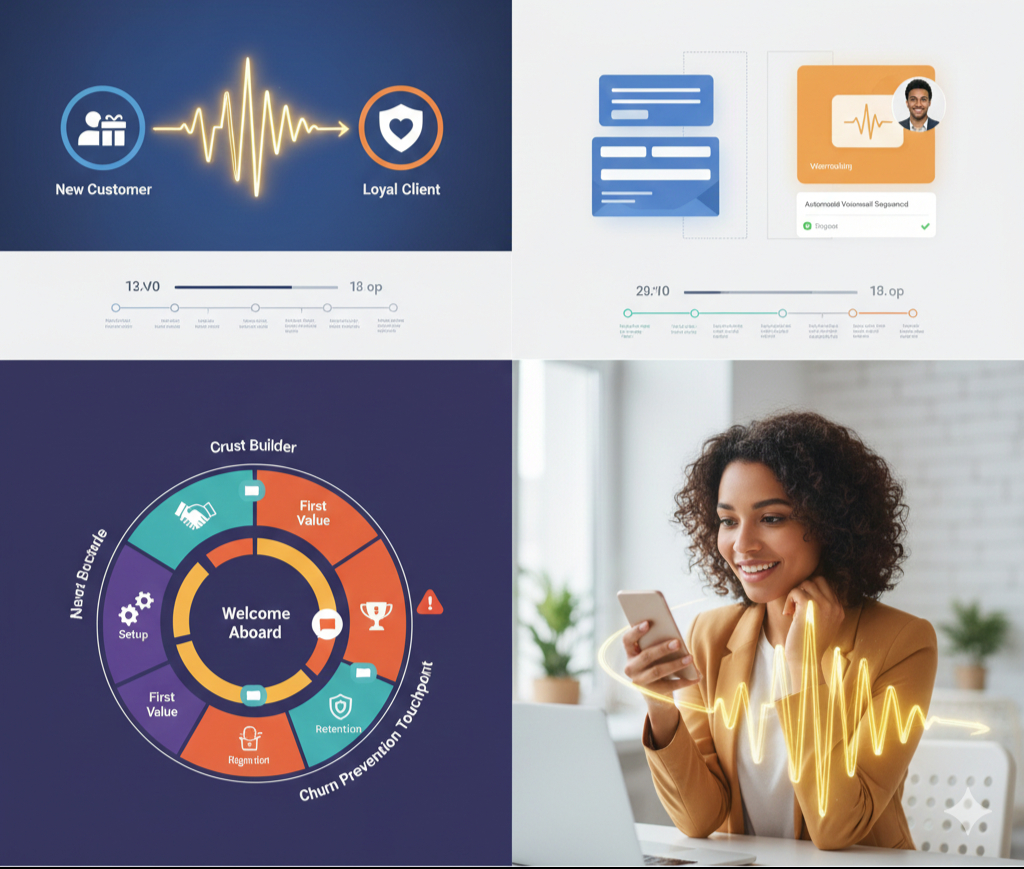
Where Ringless Voicemail Fits in the Onboarding Journey
Onboarding typically includes:
- Welcome email
- Account setup
- Kickoff call
- Educational resources
- Follow-up check-ins
Ringless voicemail can be inserted strategically at high-impact moments:
1. Immediately After Sign-Up
A short welcome message from an account manager or founder reinforces trust and sets expectations.
2. Before the First Call
A reminder voicemail reduces no-shows and psychologically prepares the client for the discussion.
3. After Implementation Milestones
Reinforce progress and highlight value delivered.
4. During Early Warning Signals
If activity drops or engagement slows, a non-intrusive voice touchpoint can prevent silent churn.
Onboarding is not a single moment. It is a sequence. Voice adds texture to that sequence.
Humanising Automation Without Making It Weird
Automation during onboarding is necessary. No team wants to manually record 200 welcome messages daily.
But automation without personality feels robotic.
The goal is not to fake intimacy. It is to deliver structured warmth at scale.
Voice works because tone communicates:
- Confidence
- Reassurance
- Competence
Text struggles to do that consistently.

Connecting Voicemail to CRM-Driven Onboarding Flows
If your onboarding process is not CRM-triggered, you are relying on hope.
Ringless voicemail becomes powerful when it is:
- Triggered by contract signature
- Activated after onboarding call booking
- Sent after milestone completion
- Deployed when inactivity thresholds are met
This ensures voicemail becomes part of your lifecycle automation rather than a random add-on.
Supporting Onboarding with Structured Telephony Infrastructure
Let’s assume your voicemail works. The client calls back.
Now what?
If responses are routed poorly, onboarding momentum collapses.
Pairing onboarding campaigns with strong telephony software ensures:
- Proper routing
- Context visibility
- Seamless call transitions
For larger teams handling onboarding at scale, structured call center software ensures every inbound question lands in the right hands.
And if you want to offer options such as “Press 1 for onboarding support” or route by department, integrating with a smart IVR system adds professional structure.
Because nothing undermines confidence like “Sorry, wrong department.”
Reducing Early-Stage Churn with Strategic Voice Touchpoints
Early churn rarely happens because the product is terrible.
It happens because:
- Expectations were unclear
- Value was not reinforced
- Communication felt distant
- Questions went unanswered
A 25-second voice message can:
- Reinforce key milestones
- Encourage usage
- Prompt engagement
- Reassure hesitant clients
Voice reminds customers there are humans behind the system.
And humans build loyalty.
Onboarding Metrics That Ringless Voicemail Can Influence
You should not deploy voicemail blindly.
Track how it impacts:
- Onboarding completion rates
- Call show-up rates
- Feature adoption
- Time to first value
- Early retention metrics
Onboarding improvements compound over time. Even small retention lifts significantly increase lifetime value.
Creating a Scalable Onboarding Voicemail Framework
You do not need 300 unique scripts.
Create structured segments:
- SMB clients
- Mid-market
- Enterprise
- Industry-specific verticals
Then personalise key elements:
- Company name
- Implementation milestone
- Specific feature usage
- Assigned account manager
This keeps execution scalable while maintaining relevance.
Automation supports the process. Strategy drives it.
Why Voice Works So Well in Early Relationships
Builds Familiarity
When a client hears your voice, it instantly creates a sense of recognition. Familiarity reduces the psychological barrier between a new customer and your company, making them more receptive to guidance and support during the onboarding process.
Reduces Perceived Distance
Voice communication bridges the gap between digital interactions and human connection. Unlike emails or automated messages, hearing a human voice makes the company feel closer, more approachable, and responsive.
Signals Accountability
A voicemail shows that someone is actively paying attention to the client’s progress. It reassures them that their success matters and that there is a real person available to help if needed.
Shortens the Trust Curve
During onboarding, clients are silently asking, “Did I make the right decision?” Hearing a voice addresses this emotionally before logic catches up. This early emotional reassurance accelerates trust, which is critical for engagement, adoption, and retention.
Reinforces Milestones and Progress
Well-timed voicemails can celebrate achievements, confirm completed steps, or highlight value delivered early in the onboarding journey. These touchpoints increase client confidence and encourage continued use of your product or service.
Enhancing Onboarding With Multi-Channel Touchpoints
Ringless voicemail is powerful on its own, but its impact multiplies when combined with other channels. A structured multi-touch onboarding sequence might include:
- Email: Introduce resources, guides, or video tutorials
- SMS: Quick reminders for upcoming calls or milestones
- Ringless Voicemail: Humanises communication and reinforces critical messages
Coordinating these channels ensures your onboarding feels seamless rather than fragmented. For guidance on combining voicemail with multi-channel outreach, check out.
Personalising Onboarding for Different Customer Segments
Not all clients are the same. Onboarding SMBs is different from enterprise clients. Ringless voicemail allows for segmented messaging that increases relevance:
- SMBs: Focus on quick wins and feature highlights
- Mid-market: Emphasise ROI and integration support
- Enterprise: Highlight dedicated account managers, compliance, and scalable solutions
Segmented voice messaging reinforces that your team understands their unique challenges, building trust from the very first interaction. Personalising messages in this way ensures that clients feel valued and understood, which increases engagement and long-term satisfaction.
Reducing Support Tickets Through Proactive Communication
A proactive voicemail can prevent confusion and reduce support requests. For example:
- Send a voicemail clarifying the first login process
- Follow up after a milestone to explain the next steps
- Address common setup questions before clients have to ask
By anticipating questions and guiding clients with voice touchpoints, you improve onboarding efficiency while reducing strain on support teams. This ensures a smoother experience and faster adoption. Proactive communication also demonstrates commitment to the client’s success, which strengthens trust and reduces early-stage churn.
Leveraging Feedback During Onboarding
Early feedback is gold. Ringless voicemail can be used to gather insights in a non-intrusive way. A short message asking how the onboarding process is going or if the client has any questions encourages engagement without feeling pushy.
Collecting feedback early allows you to adjust onboarding resources for future clients, address issues before they become churn risks, and strengthen relationships by showing that you listen. When combined with automated surveys or follow-up calls, voicemail becomes a proactive tool for continuous improvement.
Building Long-Term Engagement Beyond Onboarding
Onboarding is just the beginning. The real value comes from maintaining engagement over months and years. Ringless voicemail helps extend that relationship by celebrating milestones, product updates, or special occasions, offering personalised recommendations based on usage, and prompting participation in webinars, community events, or beta programs.
By keeping the human voice in the loop, Drop ensures that clients stay connected and feel supported long after the initial setup, which drives retention, loyalty, and long-term revenue growth.

FAQs
How can ringless voicemail improve customer onboarding?
It reinforces trust, reduces no-shows, clarifies expectations, and adds a human touch during the critical early stages of the customer relationship.
Is ringless voicemail intrusive during onboarding?
No. Unlike cold calls, ringless voicemail does not interrupt. It allows customers to listen at their convenience while still receiving a personal message.
When should ringless voicemail be used in the onboarding process?
It works best immediately after sign-up, before kickoff calls, after milestone completion, and during early signs of disengagement.
Can onboarding voicemail campaigns be automated?
Yes. When integrated with CRM workflows, voicemail messages can be triggered by specific onboarding events while maintaining personalisation.
What metrics should be tracked for onboarding voicemail campaigns?
Key metrics include onboarding completion rates, call attendance, feature adoption, early retention, and overall customer lifetime value impact.
Strengthen Your Onboarding with Drop
Customer onboarding is too important to leave to generic emails and crossed fingers.
If you want to turn new sign-ups into long-term clients, Drop gives you the infrastructure to deliver structured, personalised ringless voicemail at scale.
From CRM-triggered welcome messages to milestone-based follow-ups and churn-prevention touchpoints, Drop helps you build onboarding workflows that feel human while operating efficiently.
Contact Drop to discuss how to integrate ringless voicemail into your onboarding strategy.
Because the first impression after the sale often determines how long the relationship lasts.
